
How to Get Your First 500 Google Reviews (A Pub Landlord's Playbook)
Most pub landlords know they need Google reviews. Fewer know how many they actually need to matter. As our complete guide to Google reviews for pubs and breweries explains, volume is the single most important factor in local search ranking. This guide gives you a month-by-month plan for getting from zero to 500, using nothing fancier than a QR code, a bit of staff training, and the goodwill of customers who already like your pub.
Follow this and in twelve months you will own your postcode on Google Maps.
Why 500? The Number That Changes Everything
Before getting into the how, it's worth being clear on the why. Not why reviews matter (you know that) but why 500 specifically.
Here's what the data shows: across 884 pubs audited across 23 independent brewery estates in England and Wales, 54.2% of pubs score the maximum points for review volume. That tier represents pubs with 100 or more reviews, and in many cases significantly more than that. These are the pubs that dominate local Google search results. They appear at the top of Maps results. They fill the "Pubs near me" screen.
Think of it in four bands:
- Under 50 reviews: You are effectively invisible. Google doesn't rank you confidently because it doesn't have enough signal.
- 50 to 200 reviews: You're visible. You'll appear in searches. You're not yet competitive.
- 200 to 500 reviews: You're competitive. You'll appear near the top for most relevant searches in your area.
- 500-plus reviews: You own your postcode. At this level, with a decent rating, you are almost certainly the first pub that appears when someone nearby searches Google or opens Maps.
The good news is that your rating is almost certainly already fine. The same dataset shows 81.3% of pubs score 12 or 13 out of 15 on reputation: a 4.0 to 4.8 Google rating is normal across the industry. The problem isn't your star rating. The gap is volume.
What you're building over the next twelve months is a volume advantage that compounds. Once you have 500 reviews, you don't stop, but you don't have to work nearly as hard either.
Month 1: The Foundation (0 to 50 Reviews)
The first month is the one that requires the most deliberate effort from you personally. You're establishing habits before they become habits.
The fundamental ask: Train every member of staff to mention Google reviews after a positive interaction. Not every interaction (that would be exhausting and annoying). But when someone says "that was a lovely meal" or "best Sunday roast we've had in ages," that's the moment. The response is simple: "Really glad you enjoyed it. If you've got a moment, a Google review helps us enormously: you can find us by searching [pub name] on Google."
That's it. No hard sell, no awkwardness. Just a natural response to a compliment.
Make it easy for them to do it. The biggest friction point in the review process is people intending to leave a review and then forgetting. You remove that friction with two tools:
First, get a short URL or QR code that goes directly to your Google review submission page. Google My Business gives you a direct review link: shorten it to something like bit.ly/[pubname]-review and print that URL everywhere. Second, put QR codes in places where people have a spare thirty seconds: table tents, the back of the menu, your receipts, and the back of the toilet door. The toilet door placement sounds odd until you think about when people actually get their phones out.
Your target for month one: Two reviews per day. Seven days a week, that's 60 reviews in a month. On busy evenings, two reviews is one table noticing the QR code. On quiet afternoons, it might require a direct ask. Keep a rough mental count.
One other thing: respond to every review that comes in, within 48 hours if you can. A brief, genuine reply (not a template) signals to Google that your listing is actively managed. It also shows potential customers that you actually care. Both matter.
Months 2 and 3: The Momentum Phase (50 to 150 Reviews)
By month two you should have around 50 reviews and a small but visible presence on Google. The habits are starting to stick. Now you build momentum.
Review cards work. Print small cards (business card size is fine) with a message from you personally. Something like: "If you enjoyed your visit, a Google review helps us more than you might realise. It only takes two minutes and it means a great deal to this pub." Include the QR code and your short URL. These cards go out with every bill, every receipt, every takeaway bag.
The personal touch matters here. "A Google review helps us" is far more effective than a generic corporate request, because customers of independent pubs actually want to help. They've chosen your pub precisely because they want local businesses to thrive. Give them the mechanism.
Focus on your regulars. Your regulars are your most powerful review asset and probably the most underused one. They already know you. They already like you. They've just never been asked. Have the conversation directly: "You've been coming in on Thursdays for months now. It would honestly mean the world to us if you'd leave a review on Google. Takes two minutes."
Most regulars will do it on the spot if you ask face-to-face and remind them it's easy.
Keep responding to everything. At 100 reviews you'll have a few negative ones. Respond to those carefully and without defensiveness. A well-handled negative review is actually a positive signal to anyone reading your listing. It shows you're listening and you take your pub seriously.
Celebrate milestones publicly. When you hit 50 reviews, post about it on social media. When you hit 100, post again. Something like: "We've just hit 100 Google reviews. Thank you to everyone who's taken the time. We read every single one." This has two effects: it gives your existing reviewers a small moment of acknowledgment, and it signals to people who haven't reviewed yet that others are doing it.
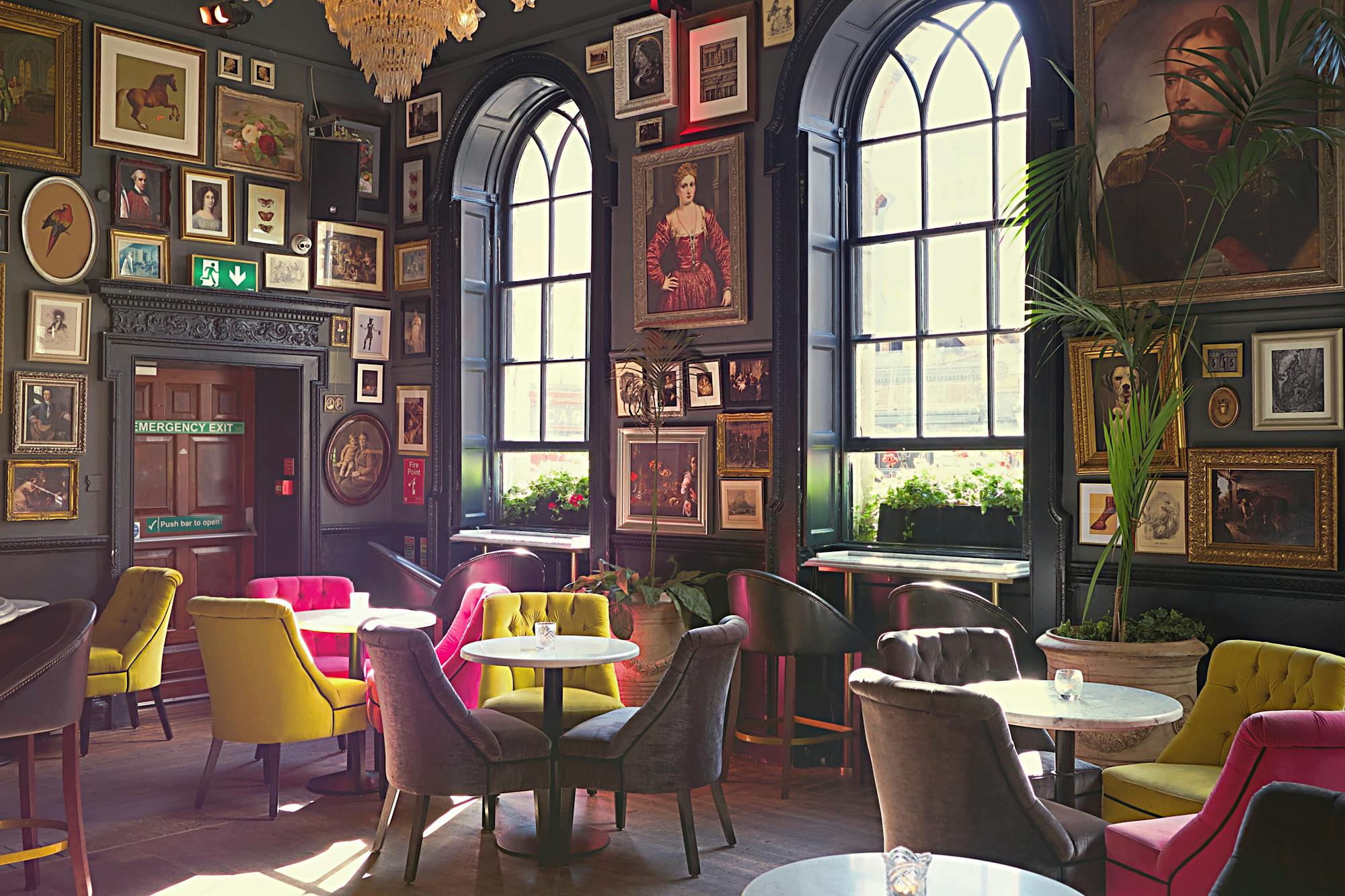
Months 4 to 6: The Compounding Effect (150 to 300 Reviews)
Something changes around the 150-review mark. Reviews start arriving without you having to ask for each one individually.
This happens because of social proof: a new customer sees 150 or 200 reviews on your listing and feels prompted to add their own, in a way they wouldn't have done if the listing had 12 reviews. The accumulated volume creates its own gravity. Don't let up on your QR codes and staff asks, but you'll notice the effort-to-result ratio improving.
Event nights are your secret weapon at this stage. Live music, quiz nights, themed evenings, tasting events: these generate emotional highs that drive review behaviour in a way that a routine Tuesday evening pint does not. People are more likely to post about experiences. Experiences that were out of the ordinary. The quiz night where their team won. The acoustic set that was better than expected. The gin tasting that turned into a three-hour evening.
Promote your events properly and you'll see review spikes in the 24 hours after. Remind attendees at the end of the evening, when the mood is warm and people are still in the pub: "If you enjoyed tonight, a Google review really helps us."
Consider a review display in the pub. A simple frame on the wall showing your best reviews (printed from Google and refreshed every few months) does two things. It gives social proof to anyone sitting near it. And it signals to customers that you take your reputation seriously. Some pubs use a chalkboard. Some use a printed frame near the entrance. The format matters less than the visibility.
Keep responding to reviews throughout this phase. At 200-plus reviews, not every response needs to be bespoke, but the ones from new customers and the ones that are anything other than five stars should always get a personal reply.
Months 7 to 12: The Long Game (300 to 500 Reviews)
By month seven you're in a fundamentally different position to where you started. Your Google listing looks credible. You're ranking well in your area. Reviews are coming in regularly even without constant prompting.
This is where consistency matters more than intensity.
Don't remove the QR codes from the tables. Don't stop responding. Don't stop the occasional direct ask. The compounding effect is real but it doesn't run forever without maintenance. Pubs that hit 300 reviews and then stop actively managing their listing tend to plateau.
Use seasonal windows deliberately. Christmas party season is the single biggest review-generating period of the year for most pubs. You're seeing more customers, including many who haven't been in for months or are visiting for the first time. The emotional stakes of Christmas bookings are higher: people want them to go well and are more likely to write about it when they do.
Run a specific push in November and December. Double down on the QR codes. Brief your staff again.
Other seasonal windows worth pushing: bank holiday weekends, summer garden weather if you have outdoor space, Valentine's Day if you do couples dining, Mother's Day.
Address negatives promptly. At 300-plus reviews you'll have seen a range of feedback, some of it unfair. Never argue publicly. Never respond defensively. If something went wrong, acknowledge it briefly, explain what you've done about it, and invite the person to get in touch directly. Future customers reading your listing will see your response far more than the original complaint.
The goal beyond 500: This playbook gets you to 500, but 500 is not the finish line. It's the point where you've established a durable competitive advantage in local search. After that, the system sustains itself with lighter maintenance. Your real aim is ongoing review velocity: a steady trickle of new reviews every week that signals to Google your pub is active and valued.
What Not to Do
A few things that will either get you penalised or backfire:
Never buy reviews. Fake review services are easily detected by Google's algorithms. Listings caught using them face penalties including removal from Maps entirely. It is not worth the risk.
Never offer incentives for reviews. "Leave a review and get a free pint" is a direct violation of Google's review policies. It also tends to produce reviews that read like incentivised reviews, which customers can detect and which undermines the social proof value of genuine ones.
Never argue with reviewers publicly. You'll lose, even when you're right. A defensive reply to a negative review is the thing future customers will remember.
Never ignore negative reviews. Silence is worse than an imperfect response. Respond briefly, professionally, and without excuses.
Never review your own pub. Google detects this: the IP address and account activity make it obvious. Even if it wasn't against the rules, a single suspicious five-star review from a newly created account looks worse than nothing.
The Numbers Behind This
The data from 884 audited pubs (detailed in the 80/20 Report on UK pub digital health) makes the stakes of review volume very concrete:
- 5 pubs in the entire dataset have zero reviews. They are completely invisible on Google. Someone within half a mile searching "pub near me" will not find them.
- 9.3% of pubs have very few reviews: their Google presence is weak to the point of unreliability.
- The pubs with 100-plus reviews (a volume score of 13) account for 54.2% of the dataset, and they dominate local search visibility in their areas.
The pattern is bimodal: pubs either have lots of reviews or very few, with a gap between them. The gap is where the opportunity sits. The 50 to 200 review zone is winnable. The 200 to 500 zone gives you a durable advantage. Above 500, you're one of the small number of pubs that genuinely own their local search results.
It's worth noting what the data also shows about star ratings: 81.3% of pubs score 12 or 13 out of 15 on reputation. That means high ratings are table stakes across the industry: almost every pub with a decent number of reviews has a 4.0 to 4.8 star average. Your rating almost certainly isn't the problem. The gap between star rating and review volume is where most pubs are leaving visibility on the table.
For more on what the actual review thresholds mean in practice, see how many reviews a pub actually needs. The answer is more specific than most landlords expect.
Your Month-by-Month Summary
| Period | Target | Key Actions |
|---|---|---|
| Month 1 | 0 to 50 | QR codes everywhere, staff training, respond to everything |
| Months 2-3 | 50 to 150 | Review cards, ask your regulars, celebrate milestones |
| Months 4-6 | 150 to 300 | Event nights, review display, let compounding work |
| Months 7-12 | 300 to 500 | Seasonal pushes, consistency, maintain the system |
Conclusion
None of this is complicated. There's no tech stack, no paid tool, no advertising budget involved. What it requires is consistency: showing up every month with the same low-key but persistent effort.
The reason most pubs don't do it isn't laziness. It's that nobody ever laid it out as a system. You're running a pub: you're managing cellar temps, booking live acts, ordering stock, and calling last orders. Google reviews feel like a nice-to-have rather than a business priority.
They aren't a nice-to-have. They are the primary mechanism by which new customers in your area decide whether to come to you or the pub down the road. Getting to 500 means being the obvious first choice when someone who's never visited your town opens Google Maps.
The playbook above works. Run it for twelve months and you'll see the difference in your bookings, your walk-ins, and your visibility.
If you want the social media side handled for you (the posts that reinforce your Google presence, build local awareness, and turn first-time visitors into regulars), that's what Pub Post Pro is built for.